

Scientists Create “Smart Underwear” To Measure How Often We Really Fart

A new nationwide study led by the University of Maryland is seeking volunteers to help document and analyze the full range of human flatulence.
Researchers at the University of Maryland have unveiled what they describe as the first wearable device built specifically to measure human flatulence.
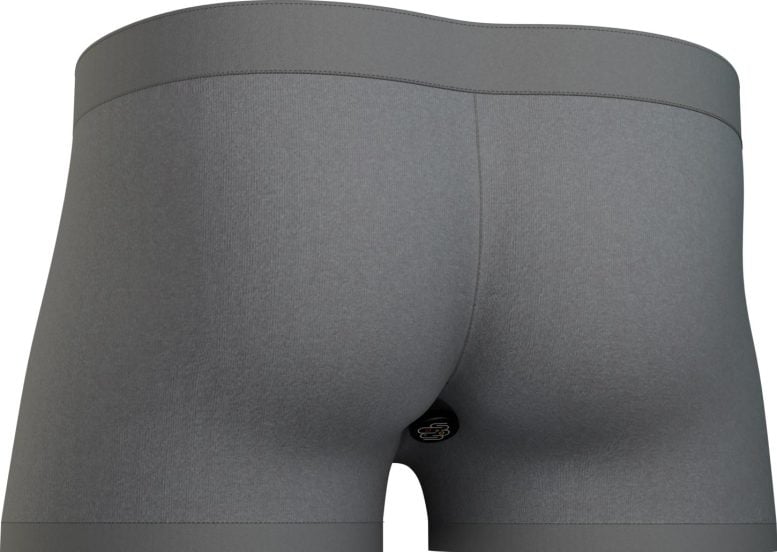
Known as Smart Underwear, the discreet sensor system tracks hydrogen gas released during flatus, giving scientists an objective way to study a bodily function that has long relied on guesswork and self-reporting. Beyond counting how often people pass gas, the technology offers a new tool for observing gut microbial activity in daily life.
Measuring what medicine could not
Excess intestinal gas is a common complaint in medical offices, yet doctors have historically lacked reliable tools to measure it. As gastroenterologist Michael Levitt, often referred to as the “King of Farts,” wrote in 2000: “It is virtually impossible for the physician to objectively document the existence of excessive gas using currently available tests.”

To overcome this limitation, a team led by Brantley Hall, an assistant professor in the Department of Cell Biology and Molecular Genetics at UMD, developed a compact wearable sensor that attaches to regular underwear. The device uses electrochemical sensors to continuously monitor intestinal gas production throughout the day and night.
In research published in Biosensors and Bioelectronics: X, UMD assistant research scientist Santiago Botasini and colleagues reported that healthy adults passed gas an average of 32 times per day. That figure is about twice the commonly cited estimate of 14 (±6) daily episodes found in medical literature. The range between individuals was striking. Some participants recorded as few as four events per day, while others reached 59.
Earlier estimates were likely lower because they depended on invasive laboratory setups with small sample sizes or on participants tracking their own gas episodes. Self-reporting can miss events, especially during sleep, and memory is not always reliable. In addition, people experience gas differently. Two individuals may produce similar amounts, yet one feels significant discomfort while the other notices very little.
“Objective measurement gives us an opportunity to increase scientific rigor in an area that’s been difficult to study,” said Hall, the study’s senior author.

Hydrogen as a microbiome signal
Human flatus is primarily composed of hydrogen, carbon dioxide, and nitrogen. Some people also produce methane. Hydrogen is especially important because it is generated exclusively by microbes in the gut as they break down undigested carbohydrates. By continuously measuring hydrogen levels, researchers can observe when and how actively the microbiome is fermenting food.
“Think of it like a continuous glucose monitor, but for intestinal gas,” Hall said.
In testing, the device detected spikes in hydrogen after participants consumed inulin, a prebiotic fiber known to stimulate microbial fermentation. The system identified these increases with 94.7% sensitivity, demonstrating that it can capture real-time changes in microbiome activity linked to diet.
This type of monitoring could eventually help scientists better understand how specific foods, probiotics, or prebiotics influence gut function outside the lab.

Launching the Human Flatus Atlas to map the normal range of flatulence
Medicine has well-established reference ranges for measures such as blood sugar and cholesterol. Flatulence, despite being a universal human function, has no widely accepted standard.
“We don’t actually know what normal flatus production looks like,” Hall said. “Without that baseline, it’s hard to know when someone’s gas production is truly excessive.”
To establish that reference point, the Hall Lab is launching the Human Flatus Atlas. The project will use Smart Underwear to track gas production in hundreds of adults across the United States. Participants can enroll remotely and receive devices by mail, making it possible to gather data from a broad and diverse population. Researchers will analyze patterns over 24-hour cycles and compare results with participants’ diets and microbiome profiles. The goal is to define what typical flatus production looks like for U.S. adults over 18.
Early findings have already revealed distinct groups:
- Zen Digesters: Individuals who eat high fiber diets (25–38 grams of fiber daily) but report very little gas. Researchers believe this group may provide insight into how the gut microbiome adapts to fiber-rich eating patterns.
- Hydrogen Hyperproducers: In simple terms, people who pass gas frequently. Studying this group may help scientists understand the biological and microbial factors that contribute to high levels of gas production.
- Normal People: Those whose gas production falls between the two extremes, representing the broad middle range of typical digestive patterns.
To better understand the microbial mechanisms at work, researchers will collect stool samples from Zen Digesters and Hydrogen Hyperproducers for detailed microbiome analysis.

“We’ve learned a tremendous amount about which microbes live in the gut, but less about what they’re actually doing at any given moment,” Hall said. “The Human Flatus Atlas will establish objective baselines for gut microbial fermentation, which is essential groundwork for evaluating how dietary, probiotic or prebiotic interventions change microbiome activity.”
By transforming an everyday bodily function into measurable data, the project could reshape how scientists study digestion, diet, and the trillions of microbes that call the human gut home.
Reference: “Smart underwear: A novel wearable for long-term monitoring of gut microbial gas production via flatus” by Santiago Botasini, David Zhan, Norman Fischer, Charlotte T. Ravel, Ashley Tien, Maggie R. Grant, Glory Minabou Ndjite, Ty Sopko, Holly Childs, Maryann Greenfield, Christina X. Qian, Kara E. Gardiner, Nayantara M. Anders, Tasnim F. Ullah, Leah T. Redmond, Delaina A. Callaway, Eliya M. Behailu, Grace M. Sarkar, Nakati C. Sany, Margaret Slavin and Brantley Hall, 10 October 2025, Biosensors and Bioelectronics: X.
DOI: 10.1016/j.biosx.2025.100699
This research was supported by the University of Maryland, the Maryland Innovation Initiative Phase I and the UM Ventures Medical Device Development Fund.
To enroll in the Human Flatus Atlas, please visit flatus.info for more information. Enrollment is open to adults ages 18 years or older in the U.S. Participants will receive a Smart Underwear device to wear day and night for the study period. Enrollment is limited.
Patent applications related to this technology have been filed, with Brantley Hall and Santiago Botasini as inventors. Both are co-founders of Ventoscity LLC, which has licensed the technology.
Never miss a breakthrough: Join the SciTechDaily newsletter.
Follow us on Google and Google News.
Source link
